World NGO Day 2026
 by Anera
Posted in: Days of Observance
Every year on February 27, World NGO Day recognizes the tireless and compassionate work that non-governmental organizations (NGOs) across the world undertake to combat poverty and inequality.
This Friday in 2026, Anera observes World NGO Day and commemorates the vital and sometimes dangerous work that humanitarians and NGOs perform.
Non-governmental organizations, otherwise known as NGOs, play a critical role in fostering a healthy, safe and equitable world. These organizations fill essential gaps in services, advocate for vulnerable populations, and respond to crises where governments or private entities may be unable or unwilling to act. Their work ensures that humanitarian aid, healthcare, education and economic opportunities reach those in need, particularly in conflict zones, disaster-stricken areas and marginalized communities.
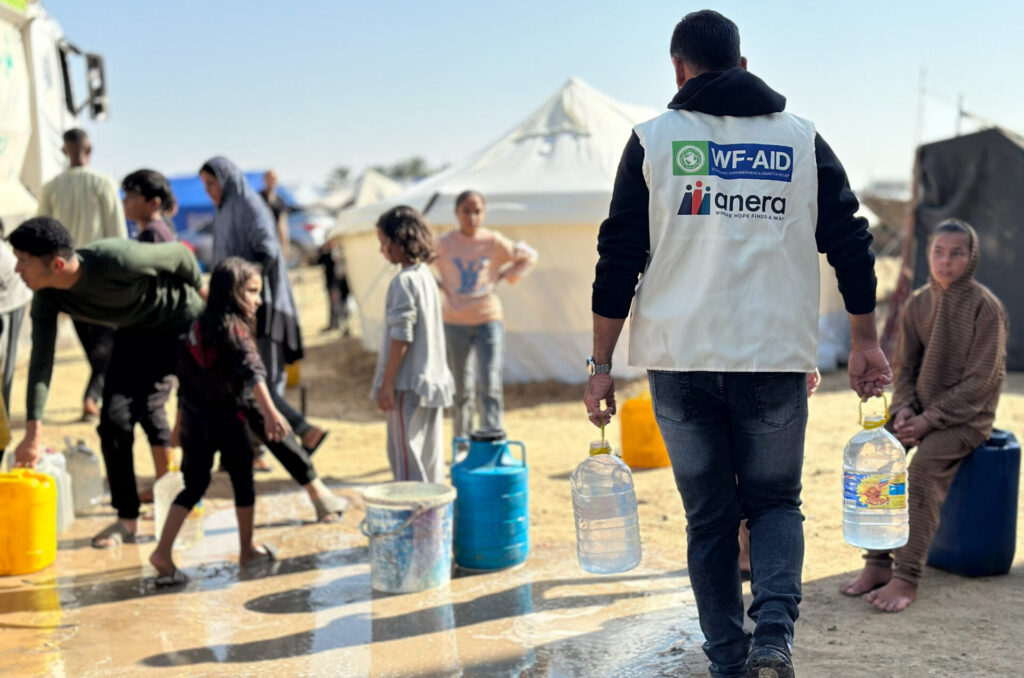
Local, sustainable, and long-term initiatives enable NGOs to build strong global communities through practical action that prioritizes human needs over diplomatic, political, or economic agendas. NGOs empower global civil society to mobilize crisis response in a way that governments or private sector entities may be unwilling or unable to.
NGOs Today
The term “non-governmental organization” was first used in 1945 around the time of the establishment of the United Nations, in order to define and differentiate the existence of civil society entities from private for-profit groups and governmental bodies. Civil organizations, however, long predate the establishment of the UN.
NGOs can operate in any size, sector or level, as long as they are created by civilians in the name of public good. Some, like the Coalition for the International Criminal Court and the United Nations Foundation act as civil society voices in the international organization spaces. Other large NGOs like Save the Children and Oxfam have thousands of employees, volunteers and interns who work in hundreds of countries around the world. Anera partners and operates alongside many of these larger NGOs, but also smaller, local NGOs within the communities we serve.
One of Anera’s local NGO partners, Nafs for Empowerment, implements psychological and social counseling for youth in Gaza. Another one of Anera’s partners, this one in Lebanon, the Women’s Programs Association, implements vocational training and mobilizes aid for refugees and other vulnerable populations of women. As part of a broader humanitarian ecosystem, these smaller NGOs often rely on support from larger organizations to scale their impact via financial or organizational support, but local NGOs are the closest to and most knowledgeable about their own communities’ issues and needs. Support for local NGOs is just as important as support for bigger or more internationally-established NGOs.

What does it mean to be part of a global community as an NGO?
Humanitarian issues like starvation, poverty and violence are issues that transcend borders. These issues affect us all. In an increasingly globalized world, the only solution to issues like these is establishment and participation in a global community.
By supporting and recognizing the tradition of NGOs, you become a member of the global community and extend your values – like peace, compassion, justice and equity – beyond your own borders to people who lack the same economic opportunities and privileges.
Your support for Anera proves that community mobilization goes beyond borders. Refugee members of our global community in Jordan, Lebanon and Palestine benefit from your support and awareness.
Think of Others
Mahmoud Darwish
As you prepare your breakfast, think of others
(do not forget the pigeon’s food).
As you conduct your wars, think of others
(do not forget those who seek peace).
As you pay your water bill, think of others
(those who are nursed by clouds).
As you return home, to your home, think of others
(do not forget the people of the camps).
As you sleep and count the stars, think of others
(those who have nowhere to sleep).
As you liberate yourself in metaphor, think of others
(those who have lost the right to speak).
As you think of others far away, think of yourself
(say: “If only I were a candle in the dark”).
فكّر بغيرك
وأنتَ تعدّ فطورك، فكّر بغيرك
[ لا تنسَ قوت الحمام ]
وأنتَ تخوض حروبك، فكّر بغيرك
[ لا تنس من يطلبون السلام ]
وأنتَ تسدّد فاتورة الماء، فكّر بغيرك
[ من يرضعون الغمام ]
وأنتَ تعود إلى البيت، بيتك، فكّر بغيرك
[ لا تنس شعب الخيام ]
وأنت تنام وتحصي الكواكب، فكّر بغيرك
[ ثمّة من لم يجد حيّزاً للمنام ]
وأنت تحرّر نفسك بالاستعارات، فكّر بغيرك
[ من فقدوا حقّهم في الكلام ]
وأنت تفكّر بالآخرين البعيدين، فكّر بنفسك
[ قل: ليتني شمعةٌ في الظلام ]
World NGO Day 2025
On this World NGO Day, Anera honors the critical role that nonprofits and NGOs play in fostering a healthy, safe, and equitable world. These organizations fill essential gaps in services, advocate for vulnerable populations, and respond to crises where governments or private entities may be unable or unwilling to act. Their work ensures that humanitarian aid, healthcare, education, and economic opportunities reach those in need, particularly in conflict zones, disaster-stricken areas, and marginalized communities.
Beyond immediate relief, NGOs build long-term resilience by mobilizing resources, leveraging expertise, and engaging directly with local communities. In doing so, they strengthen civil society, promote human rights, and drive sustainable development. Their contributions not only benefit the communities they serve but also contribute to global stability and security.
How NGOs Strengthen Stability and Security
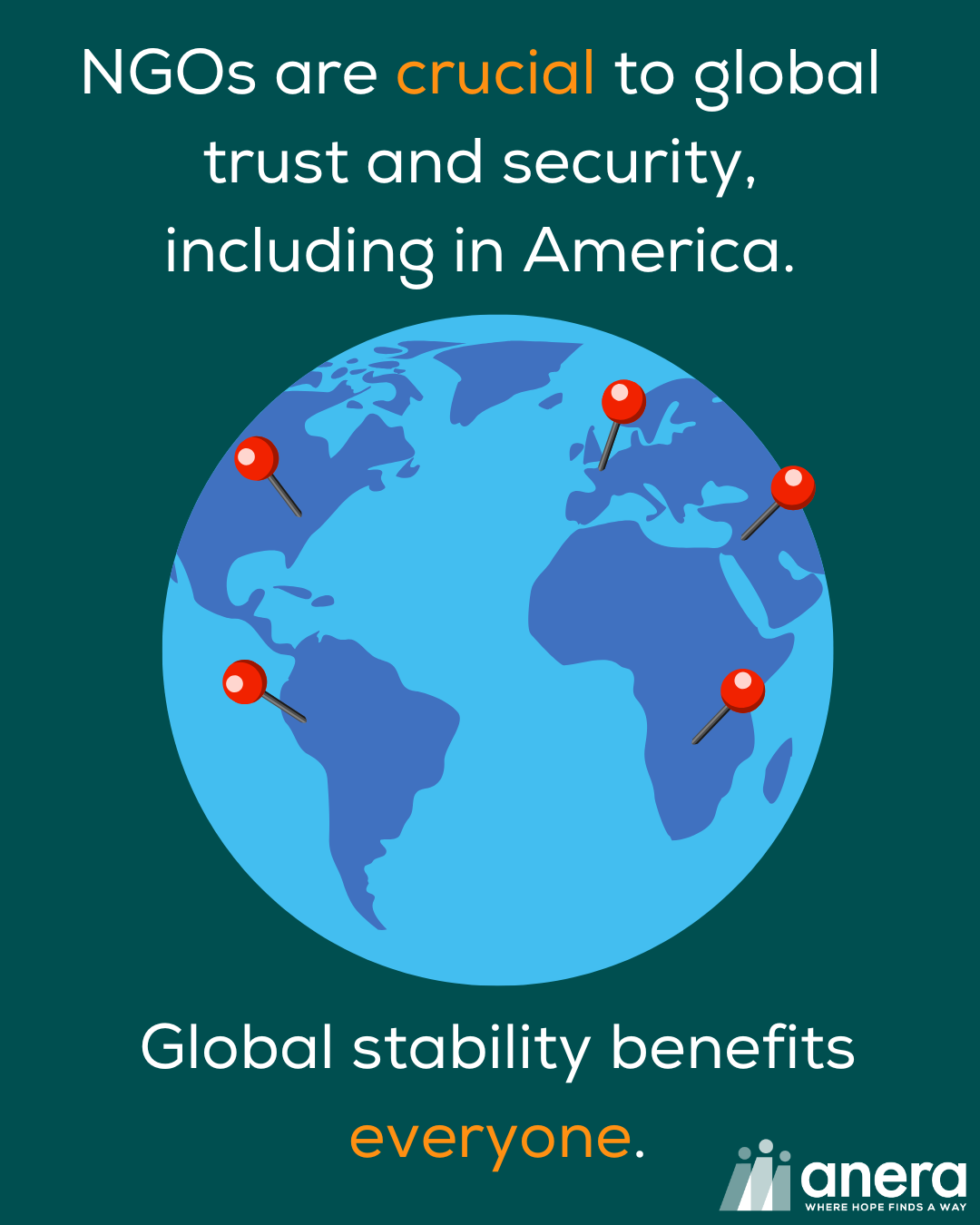
By addressing humanitarian crises, promoting education, and expanding economic opportunities, NGOs play a critical role in reducing extremism, fostering social cohesion, and supporting governance reforms rooted in democratic values. Many NGOs provide life-saving assistance while laying the groundwork for long-term economic stability, which ultimately benefits not only local populations but also global security — including that of the United States.
Anera, for example, prioritizes education as a long-term investment in stability and prosperity. By building schools, enrolling students, and providing educational resources like laptops, we equip young people with the skills to improve their own communities. Without this support, families in places like Lebanon or the West Bank and Gaza often have no choice but to focus solely on day-to-day survival. When the future is deprioritized, communities remain trapped in cycles of instability. Similarly, reducing NGO funding weakens U.S. influence in critical regions, creating power vacuums that adversaries can exploit.

NGOs and National Interests
Far from being an isolated effort, NGOs contribute to international goodwill, foster trade relationships, and reduce reliance on military and diplomatic interventions by addressing crises before they escalate. When NGOs are defunded, the consequences ripple far beyond the communities they serve — humanitarian crises worsen, displacement increases, and security threats rise, ultimately impacting the U.S. and its allies.
The Role of International NGOs
International NGOs operate across borders, responding to humanitarian needs wherever they arise. Unlike government agencies, they are not bound by national policies but rather by their mission to serve communities in crisis. As a locally-based international NGO, Anera navigates the complex balance between global engagement and deep-rooted local knowledge, ensuring that our programs reflect the lived experiences of those we serve.
Some critics argue that international NGOs undermine national sovereignty, but in reality, global security and stability benefit every nation, including the U.S. Supporting international NGOs is not just an act of charity — it is a strategic investment in a safer, more prosperous world for all.
World NGO Day 2024
Recognizing the Global Importance of NGOs
This Tuesday, February 27th, commemorates World NGO Day. The day is an international recognition of the tireless and compassionate work that non-governmental organizations (NGOs) across the world undertake to combat poverty and inequality. This day celebrates not just NGOs themselves, but also the vision for a better world and happier humanity that often unites them. While NGOs cannot permanently fix the world’s problems, they work on the frontlines to fundamentally change people’s lives.
The day has six primary objectives:
- Foster collaboration among NGOs, enabling them to share knowledge and experiences.
- Provide a platform for global audiences to understand the impactful initiatives of NGOs at local, national, and international levels.
- Acknowledge and celebrate the achievements of NGOs across diverse sectors.
- Encourage individuals to explore career opportunities within the NGO and non-profit sector.
- Illuminate the faces and stories behind the work of NGOs, allowing for greater connection and understanding.
- Empower NGOs to openly discuss their work and challenges, facilitating the formation of strategic partnerships.
World NGO Day was officially proposed by Latvian-British philanthropist – Marcis Skadmanis on April 17th, 2010, and recognized by member countries of the Baltic Sea NGO Forum: Belarus, Denmark, Estonia, Finland, Germany, Iceland, Latvia, Lithuania, Poland, Russia, Norway and Sweden. The first official World NGO day was hosted on February 27th, 2014 in Helsinki, Finland, and since then, the European Union releases a statement every year on the day. Read last year’s statement here.
NGOs are third-sector organizations, meaning that they operate outside of any government and/or nation. NGOs bring together people from all over the world to creatively solve issues that are not being addressed by governments, policy, and/or social systems. Like a non-profit organization, NGOs are not businesses that make a profit, but instead run through funding acquired by donations and grants. The dedication is a testament to the commitment of NGO workers to make a positive difference in the world around them.
Anyone can start an NGO, which allows the field to range from international, multi-million dollar organizations to local grassroots campaigns. NGOs tend to be either operational- or advocacy-based, though some NGOs work in both categories. The former focus on development projects, such as infrastructural support, through funding and planning. The latter focus on policy changes and devote themselves to tackling systemic problems by working with governments.
Anera: a 56-year-old NGO with deep roots
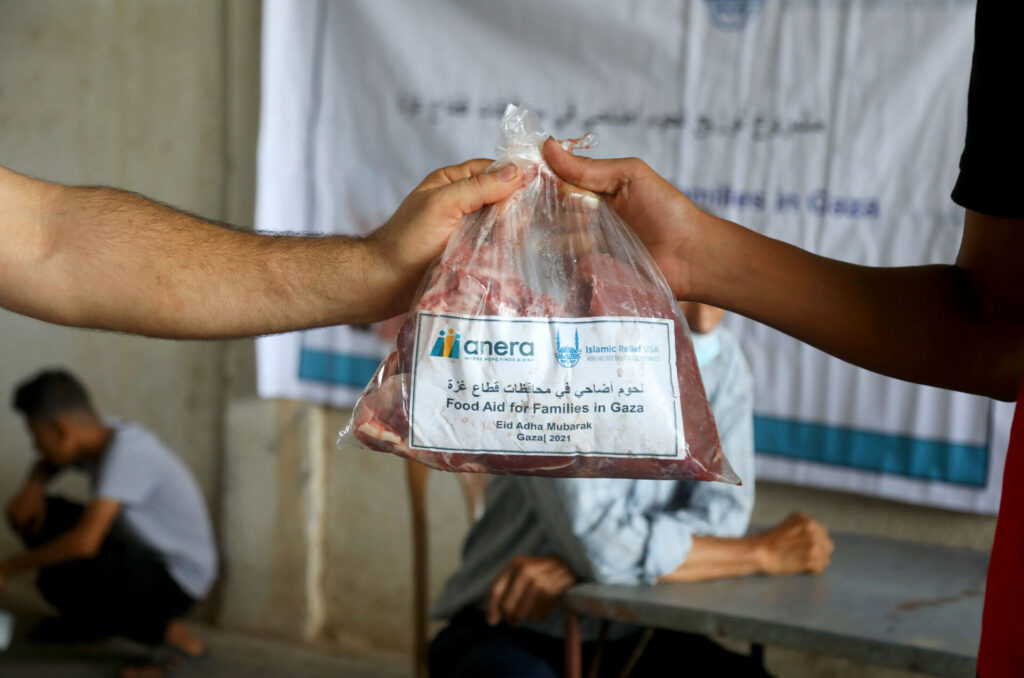
Since 1968, Anera has been responding to the critical needs of the Palestinian people and others caught in conflict and disaster. In just the last year, Anera delivered over $170M in assistance to Lebanon, Palestine, and Jordan. This includes, among much else, the delivery of 98 medical shipments. In Lebanon, Anera empowered the education of 859 girls to prevent them from being coerced into marriage through our Sama Project. In Jordan, Anera provided 300 students with laptops and educational materials to promote digital literacy. During Eid Al Adha in 2023, Anera distributed meat to 16,345 families in every governorate across Gaza.
Anera’s staff works out of 11 offices in Jerusalem, Ramallah, Gaza, Amman, Beirut, Akkar, South Lebanon, Bekaa, Tripoli, Cairo and Washington DC. All staff members in the Middle East come from the communities they serve, which allows Anera to assess needs, distribute resources, and collaborate effectively. Anera is uniquely positioned to navigate the political and logistical barriers that can inhibit progress to focus on the most important thing: human well-being.
Participate in World NGO Day
Since World NGO Day focuses on raising awareness and collaboration, the best ways you can celebrate it are through similar tasks. Look to the hashtag, #WorldNGODay, on social media to interact with the conversation and spread the word yourself. You can reach out to an NGO that interests you or intersects with your line of work and donate and share their mission. On a larger scale, you can schedule virtual conferences on World NGO Day, record them, and then share with the public on social media in order to bring together people from around the world.